Vinyl siding for central and northern New Jersey
Vinyl Siding for New Jersey Homes
Vinyl siding in NJ usually costs less to install than steel or fiber cement, according to national cost guides, and it asks little of you once it is up. The gap between a thin panel and a solid one is easy to miss on a sample board, so we start with thickness and certification.
- 5 on Google (12 reviews)
- Lifetime workmanship warranty for as long as you own the home
- Free written estimates
Thickness
How thick should vinyl siding be?
Ask for about 0.042 inch or thicker. That is the practical floor most pros use, according to the Journal of Light Construction, even though certification allows thinner panels.
| Thickness | What it means |
|---|---|
| 0.035 in. | Minimum thickness for certification under ASTM D3679 |
| About 0.042 in. | Thinnest product most pros will install |
| Up to about 0.055 in. | Upper end of what is available |
Thicker panels give better stability, rigidity and impact resistance, JLC reports. The trade-off is that overlap joints, where two panels meet end to end, show more on thicker material. We plan where the laps fall so they sit away from the main views where the wall allows.
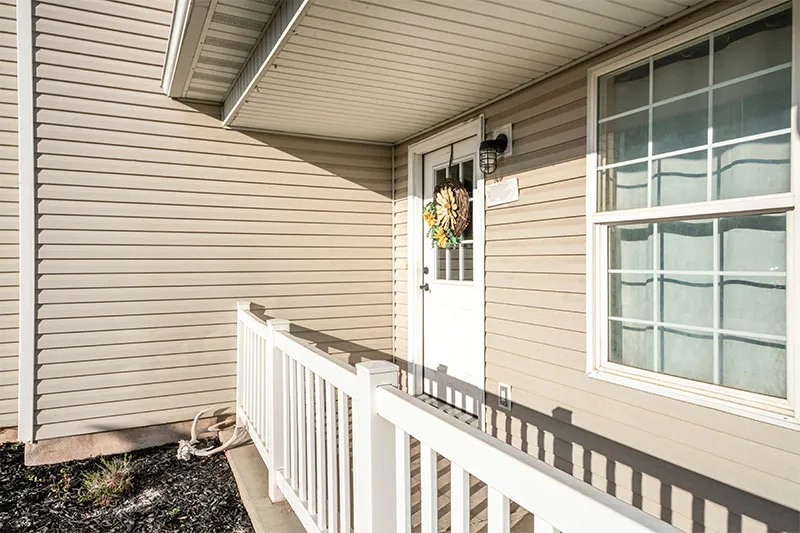
Certification
What does VSI certification tell you?
It tells you a third party checked the siding against the ASTM D3679 standard. The Vinyl Siding Institute’s program, now run by the Polymeric Exterior Products Association (PEPA), uses accredited labs such as Intertek to do the checking. The tests cover:
- Weatherability
- Wind load
- Impact resistance
- Expansion and shrinkage
- Surface distortion
- Dimensions
- Rate of burn
- Lead content
Certified products carry the program mark, and you can look a product up in Intertek’s Building Products Directory. If a quote names a product, check it there before you sign.
Vinyl or polypropylene?
Polypropylene siding is a different plastic, certified to a different standard, ASTM D7254. In New Jersey, repairing or replacing polypropylene siding needs a construction permit, while replacing vinyl on a detached one- or two-family house does not.
Insulated vinyl
Is insulated vinyl siding worth it?
It adds a modest layer of insulation outside the wall, and the honest size of that benefit is printed on the label. Insulated vinyl has rigid foam attached to the back of each panel and is specified under ASTM D7793.
Certified insulated siding must reach at least R-2.0 in the ASTM C1363 hot-box test, according to a Vinyl Siding Institute presentation hosted by the Department of Energy. The institute’s energy modeling used products rated R-2.0 to R-3.0. PEPA adds that claimed R-values must come from actual testing, and that ENERGY STAR Qualified Homes v3 recognizes insulated siding for reducing thermal bridging, the heat that slips out through wall studs.
Use the tested R-value for the exact product, not a general claim. We do not promise a percentage off your heating bill, because no source we trust supports one. If comfort is the goal, insulation and air sealing are worth a look too; New Jersey’s utility efficiency programs are built around them.
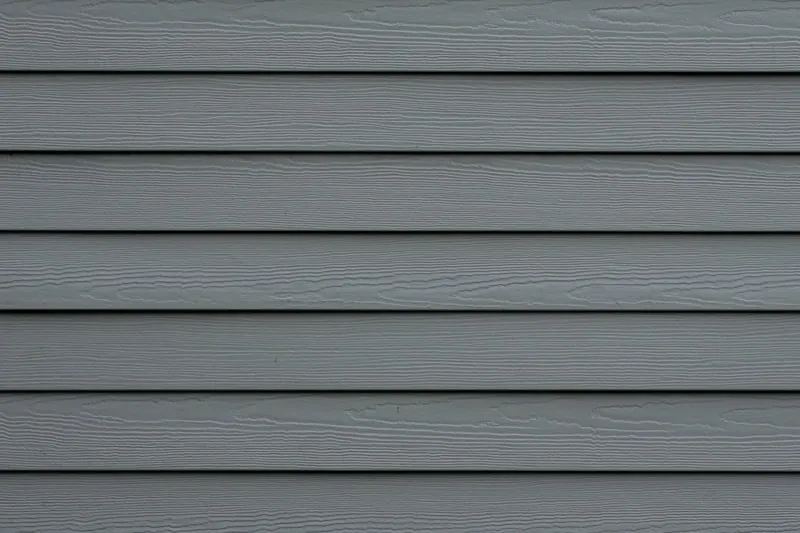
Weather
How does vinyl handle New Jersey wind and summer sun?
Certified vinyl that is hung correctly handles both, with two known limits: sun can fade its color, and big temperature swings can crack boards. Vinyl grows and shrinks with temperature, which is why certification tests expansion and shrinkage and why each panel is fastened so it can slide.
Wind
Certification includes a wind load test, but the design wind value for your house depends on its address. New Jersey’s DCA Bulletin 19-1 points designers to ASCE 7 hazard tools for site-specific values. Coastal storms are most frequent from October to April, according to the State Climatologist, so starter strips, fasteners and trim need to be right the first time.
Heat and sun
HomeGuide notes that vinyl color may fade in direct sun and that boards can crack where temperatures swing widely. Thicker panels resist impact better, and leaving room to move at each fastener and trim pocket helps keep panels from buckling as they warm up.
Upkeep
What upkeep does vinyl siding need?
Vinyl is low maintenance, not no maintenance. A few habits keep it looking right:
- Rinse it with a garden hose and a soft brush when dirt or mildew shows.
- Look for cracked, loose or wavy panels after storms and deep cold snaps.
- Trim shrubs back from the walls so the siding can dry.
- Keep sprinklers from soaking the same wall every day.
Ask for a few spare panels from your job. A spare from the same order makes a storm repair easier to blend in.
On a house built before 1978, removing old siding or painted trim is usually covered by EPA’s RRP lead rule, so prep there calls for lead-safe work practices. Our siding overview explains those rules and the permit picture.
Budget
What does vinyl siding cost?
Vinyl has the lowest installed range of the three sidings we offer. HomeGuide estimates $4 to $12 per square foot installed nationally, against $6 to $15 for fiber cement and $7 to $16 for steel, plus $0.70 to $2.00 per square foot to remove old siding.
The same guide estimates a 30 to 40 year life for vinyl. Thickness, insulated backing, trim, the number of stories and any lead-safe work move the total. New siding is an exempt capital improvement for New Jersey sales tax when you give the contractor Form ST-8. Your exact price comes from a free measurement.
Pair it with new gutters and aluminum-capped soffit and fascia while the ladders are up. Comparing materials? See seamless steel siding, fiber cement siding, or our guide to choosing between vinyl, fiber cement and steel.
Our written workmanship warranty covers the installation, and the siding maker warrants the product; see the warranty page. We install vinyl siding across ten counties, listed on our service areas page.
Get a free estimate
Tell us about the house and the work. We visit, measure and give you a written price before any work starts.
Prefer to talk now? Call (732) 231-5327.
Vinyl siding questions
What thickness of vinyl siding should I ask for?
ASTM D3679 sets 0.035 inch as the minimum for certification, but the Journal of Light Construction reports that most pros will not use anything thinner than about 0.042 inch. Products up to about 0.055 inch are available and feel stiffer on the wall.
How can I check that vinyl siding is certified?
Look for the VSI certification mark, then search the product in Intertek’s Building Products Directory. The program, now run by the Polymeric Exterior Products Association, has accredited third parties verify that the siding meets ASTM D3679.
How much R-value does insulated vinyl siding add?
Certified insulated siding must test at R-2.0 or higher, and the Vinyl Siding Institute’s own energy modeling used products rated R-2.0 to R-3.0. Go by the tested value printed for the exact product, not a general claim.
Will vinyl siding fade or crack?
It can. HomeGuide notes vinyl color may fade in direct sun and boards can crack where temperatures swing widely. Thicker panels are stiffer and more impact-resistant, per the Journal of Light Construction, and correct fastening lets panels move with the temperature.
How long does vinyl siding last in New Jersey?
HomeGuide’s national guide estimates 30 to 40 years. Sun exposure, panel thickness and the quality of the installation all affect where a given wall lands in that range.
Do I need a permit to install vinyl siding in NJ?
Not to replace existing siding on a detached one- or two-family house; the state code treats that as ordinary maintenance. Polypropylene siding, a different plastic, always needs a permit for repair or replacement.
Free estimate
Ready to price vinyl siding for your house?
We measure the walls and put the product, thickness, color and trim in a written estimate, so you can compare quotes line by line.
Call (732) 231-5327 or send the form.