Replacement windows
Window Replacement in Central and Northern New Jersey
Window replacement in NJ starts with your county, because ENERGY STAR sets a stricter insulation target in seven counties, Somerset, Morris and Sussex among them, than in the rest of the state. We help you match the glass, the frame and the installation method to your house, then list each window’s make, model and rated numbers in a written estimate.
- 5 on Google (12 reviews)
- Lifetime workmanship warranty for as long as you own the home
- Free written estimates
When to replace
When is it time to replace your windows?
Replace a window when repair no longer fixes the problem. These are the usual signs:
- Fog or droplets between the panes
- Soft or rotted wood at the sill, the sash or the outside trim
- Sashes that stick, drop or will not lock
- Single-pane glass that relies on storm windows
- Drafts around the sash on a cold, calm day
When fog forms between the panes, the glass seal has failed, and Natural Resources Canada says that unit should be replaced. If the frame is sound, new glass may do; HomeGuide lists glass-only replacement at about $300 to $650.
Fog on the room side is different. Andersen explains that it comes from moist indoor air, not a failed window, so check your humidity first. Our guide to the signs your home needs new windows covers each warning sign.
ENERGY STAR zones
Which ENERGY STAR zone is your county in?
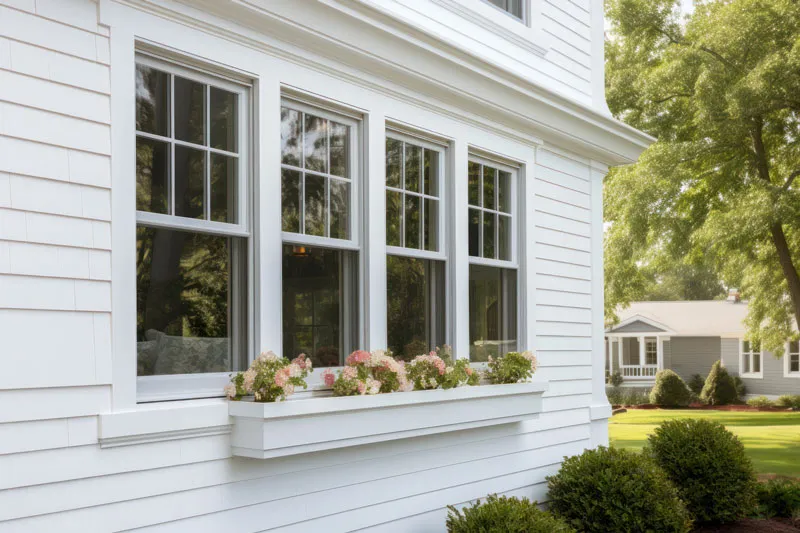
ENERGY STAR splits New Jersey into two window zones. Seven counties, from Sussex and Bergen down to Somerset and Hunterdon, are in the Northern zone, where a certified window needs a U-factor of 0.22 or lower. Every other county is North-Central, where the limit is 0.25.
| ENERGY STAR zone | New Jersey counties | U-factor | SHGC |
|---|---|---|---|
| Northern | Bergen, Hunterdon, Morris, Passaic, Somerset, Sussex and Warren | 0.22 or lower | 0.17 or higher |
| Northern, equivalent performance option | The same seven counties | 0.23 to 0.24, or 0.25 to 0.26 | 0.35 or higher, or 0.40 or higher |
| North-Central | Every other county, including Middlesex, Mercer, Monmouth, Ocean, Essex and Union | 0.25 or lower | 0.40 or lower |
Of the ten counties we serve, Somerset, Morris, Hunterdon, Passaic and Sussex are Northern; Middlesex, Monmouth, Mercer, Essex and Ocean are North-Central. Every ZIP code in a New Jersey county shares its county’s zone, and the split matches the state’s energy-code climate zones, 5A and 4A, in DCA Bulletin 22-1.
A window certified for North-Central may not meet the Northern numbers, so the zone belongs on every quote. Our page on energy-efficient windows shows how to check a label against it.
The numbers
What do U-factor and SHGC mean?
U-factor measures how fast heat escapes through a window; lower is better. SHGC, the solar heat gain coefficient, measures how much of the sun’s heat gets through the glass, on a scale from 0 to 1.
U-factor
The Department of Energy says a lower U-factor means less heat flow, and adding a pane, a low-E coating or an argon or krypton fill all lower it. ENERGY STAR tightens it as you go north: 0.25 in the North-Central zone, 0.22 in the Northern zone.
SHGC
DOE’s Federal Energy Management Program defines SHGC as the share of solar heat that passes through the glass. The North-Central zone caps it at 0.40. The Northern zone sets a floor of 0.17 and accepts a slightly higher U-factor when SHGC is higher, which gives credit for winter sun.
Low-E coatings and argon
A low-emissivity (low-E) coating blocks radiant heat but still admits visible light, and DOE notes it helps protect floors and furniture from fading. Argon or krypton between the panes insulates better than air; EPA found argon the most common fill and krypton the costlier one.
Glass packages
Double-pane or triple-pane: which is right for you?
It depends mostly on your county. In the five Northern-zone counties we serve, triple-pane glass is the usual way to reach a 0.22 U-factor. In the North-Central counties, a high-spec double-pane window can meet the 0.25 limit, often for less.
| Double-pane | Triple-pane | |
|---|---|---|
| Typical U-factor, vinyl windows (EPA analysis) | 0.28 to 0.31 with one low-E coating and argon; some high-spec designs reach 0.21 | 0.22 to 0.23 with two low-E coatings and argon |
| Installed cost per window, national (HomeGuide, 2026) | $400 to $2,000 | $450 to $3,000 |
| Where it usually fits | North-Central counties, when a high-spec unit meets 0.25 | Northern-zone counties, where most certified product lines below 0.24 use three panes |
We do not quote a percentage savings. EPA’s analysis shows a third pane, with matching frame and coating upgrades, cutting U-factor by about 0.06 or more, and what that saves depends on the house. See triple-pane windows for weight, condensation and cost, or our guide on whether triple-pane windows are worth it in New Jersey.
Installation method
Full-frame or insert replacement: which do you need?
Insert replacement sets a new window inside the existing frame. Full-frame replacement takes the old window out down to the rough opening, so the framing, flashing and insulation around it can be checked and redone.
An insert leaves the old frame and trim in place, disturbs less of the house and usually takes less labor. The trade-offs: slightly less glass, since the new frame sits inside the old one, and an old frame that must be sound and square.
Full-frame fits better when the frame or sill is rotted, when water has been getting in, or when you want a new size or style. It also pairs well with new siding, because the window flashing and the wall wrap can be lapped together.
At the estimate visit we check the frames and sills and recommend a method for each opening, in writing.
Older homes
How is window replacement done lead-safe in a pre-1978 home?
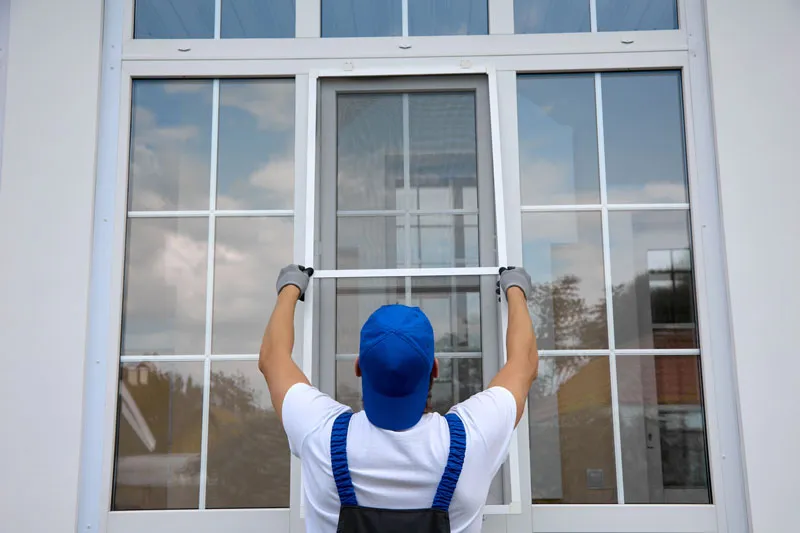
In a home built before 1978, window replacement is always covered by EPA’s lead paint rule, however few windows you replace. The work has to be done by a certified firm, with certified renovators using lead-safe work practices.
EPA’s Renovation, Repair and Painting rule exempts small jobs as minor repair, up to six square feet of painted surface per room inside or 20 outside, but never window replacement. EPA itself administers the program here.
On top of that, unless the paint has tested lead-free, the state’s Rehabilitation Subcode (N.J.A.C. 5:23-6.4) rules out these methods on pre-1978 painted surfaces:
- Burning paint off with an open flame
- Heat guns running hotter than 1,100 degrees F
- Power sanding without a HEPA vacuum attachment
- Power washing without containment
Roughly six in ten New Jersey homes are old enough for this to matter: about 61 percent date from before 1980, per the 2024 American Community Survey. Before any window comes out of an older house, ask to see the contractor’s EPA lead-safe firm certificate.
Credits and rebates
Can you get a tax credit or rebate for new windows in 2026?
Not a federal tax credit. The IRS says the Energy Efficient Home Improvement Credit is not allowed for property placed in service after December 31, 2025, so nothing installed in 2026 qualifies.
That credit, section 25C, was ended by Public Law 119-21 (IRS). Articles that still promise it are out of date. This is general information, not tax advice.
We know of no New Jersey window rebate for 2026 either. The NJ Clean Energy Program’s utility-run offers for homeowners center on insulation and air sealing. Its federal rebate programs were still in development as of October 2026, with windows not among the possible measures. Ask your utility, but do not count on a window rebate.
Budget
What does window replacement cost?
National cost guides put a typical replacement window at about $450 to $1,500 installed. HomeGuide’s 2026 guide gives a national average of about $900 per window.
- Double-pane: $400 to $2,000 per window installed
- Triple-pane: $450 to $3,000 per window installed
- Double-hung $350 to $2,500; casement $400 to $3,000; bay $2,000 to $6,000
- Glass-only replacement when the frame is sound: $300 to $650
HomeGuide attributes 65 to 75 percent of the cost to the window itself. Size, style, frame, glass, installation method, trim and lead-safe setup all move the total. These are national estimates, not New Jersey prices. Your exact price comes from a free measurement.
For any job over $500, New Jersey calls for a contract in writing, signed by you and the contractor, that names the main products, with make, model and size where they apply (N.J.A.C. 13:45A-16.2). You may cancel before midnight of the third business day after receiving your copy. Our process page shows how we handle the paperwork.
Our installation comes with a written workmanship warranty, and window makers warrant their own products; the warranty page explains both.
Our workmanship warranty is a lifetime warranty: it covers our installation work for as long as you, the homeowner who signs the contract, own the home. It does not transfer to a later owner. Materials and paint finishes carry their manufacturers' own warranties, and the full written warranty comes with every estimate so you can read it before you sign.
The rest of the house
What else should you plan with new windows?
If the siding or roof will need replacing within a few years, plan the windows at the same time. Window flashing ties into the wall, and the trim around each window is usually redone with the siding.
Triple-pane windows
Three panes, two low-E coatings and argon: the usual route to 0.22 in the Northern zone.
Energy-efficient windows
Reading the rating label, your county’s zone, and why installation matters.
Soffit and fascia
The trim coil that caps window casings also wraps fascia, so the two jobs often pair up.
See also our siding options, metal roofing and our gutter options. We replace windows in ten counties across central and northern New Jersey, all listed on our service areas page.
Get a free estimate
Tell us about the house and the work. We visit, measure and give you a written price before any work starts.
Prefer to talk now? Call (732) 231-5327.
Window replacement questions
How do I know which ENERGY STAR zone my New Jersey home is in?
Go by county. ENERGY STAR puts Bergen, Hunterdon, Morris, Passaic, Somerset, Sussex and Warren in the Northern zone, where the U-factor limit is 0.22. Every other county, including Middlesex, Mercer, Monmouth, Ocean, Essex and Union, is North-Central, with a limit of 0.25.
Can I claim a federal tax credit for new windows in 2026?
No. The IRS says the Energy Efficient Home Improvement Credit (25C) is not allowed for property placed in service after December 31, 2025, so work finished in 2026 does not qualify, whatever an older article says. This is general information, not tax advice.
Does New Jersey offer rebates for replacement windows?
We know of none for 2026. The NJ Clean Energy Program’s utility-run offers for homeowners focus on insulation and air sealing, and its federal home energy rebate programs were still in development, with windows not on the list. Ask your utility, but do not count on a window rebate.
Do lead-safe rules apply when replacing windows in an old house?
Yes, for any house built before 1978. EPA’s RRP rule applies to every window replacement in those homes, however many windows are involved. The firm and its renovators must be certified and must follow lead-safe work practices.
How much does it cost to replace a window in New Jersey?
HomeGuide’s 2026 national guide prices the typical replacement window at $450 to $1,500 installed, averaging about $900, with triple-pane units at $450 to $3,000. We know of no New Jersey-only figure. Your exact price comes from a free measurement.
Why do my windows sweat on the inside in winter?
Usually because the indoor air is too humid. Andersen says room-side condensation is moisture meeting the coolest surface in the room, not a glass failure, and suggests winter indoor humidity no higher than 30 to 35 percent. Fog between the panes is different: that seal has failed.
Free window estimate
Get every window priced and rated in writing
We measure each opening, check the frames and sills, then write up an estimate that lists each window’s U-factor and SHGC.
Phone (732) 231-5327, or fill in the form above.