The signs you need new windows are easy to spot once you know them: fog between the panes, drafts, sashes that fight you and wood that has gone soft. One sign on one window often means a repair. Several signs across an older house usually point to replacement.
Below: the seven signs, what each one usually means, and what to do next in New Jersey.
What are the signs you need new windows?
Check each window for these seven. Some point to a fixable part; others mean the window is done.
1. Is there fog or moisture between the panes?
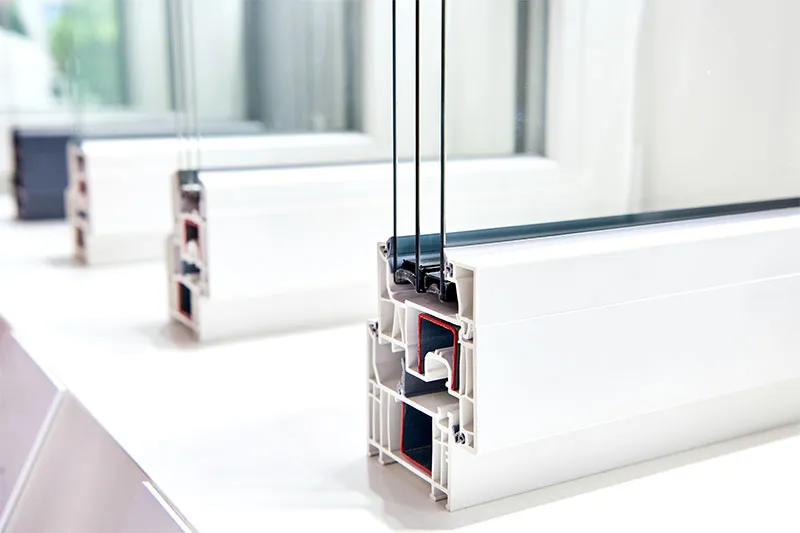
Then the seal on the insulating glass has failed. Natural Resources Canada says condensation between the panes of a sealed unit means the seal is gone and the unit should be replaced. If the sash and frame are still solid, that can mean new glass rather than a whole new window.
2. Can you feel drafts or cold glass in winter?
Air you can feel around a closed sash points to worn weatherstripping, a warped sash or a frame that has shifted. For comparison, ENERGY STAR caps air leakage at 0.3 cubic feet per minute per square foot of window. Cold glass is a separate problem. The Department of Energy says extra panes, low-E coatings and argon or krypton fills all cut heat flow, so glass without them loses more heat.
3. Does the inside of the glass sweat or frost up?
Andersen explains that room-side condensation comes from moist indoor air meeting the glass, usually the coolest surface on the wall, and is not a glass failure. It recommends winter indoor humidity of 30 to 35 percent or lower. If the glass still runs wet after you lower humidity and run exhaust fans, colder glass is part of the cause. Natural Resources Canada notes that high-performance, more airtight windows have less condensation than ordinary ones.
4. Do the sashes stick, drop or refuse to lock?
A sash that slides down on its own, a casement that will not crank shut or a lock that no longer lines up is more than a nuisance. A window that will not close tightly leaks air, and one that will not open is a problem in an emergency. Balances, cranks and locks can often be replaced when parts are available. A warped or rotted sash usually cannot be saved.
5. Is the wood soft, peeling or stained around the frame?
Probe the sill and lower frame with a screwdriver. If it sinks in, water has been getting in. Stains below a window after wind-driven rain tell the same story, and the Office of the New Jersey State Climatologist notes that most winters bring at least one significant coastal storm. Small spots of rot can be repaired; rot that runs through the sill or into the wall framing calls for replacement.
6. Are floors fading or rooms overheating in the sun?
Both point to glass that lets in more solar energy than you want. The Department of Energy says low-E coatings block radiant heat while letting visible light through, and help protect furniture and floors from fading. Solar heat gain coefficient (SHGC) measures that heat on a 0 to 1 scale, and lower means less of it gets in.
7. Can you hear traffic and rattles through the glass?
Rattling sashes often mean a loose fit, and a loose window lets in sound along with air. A tighter window can help, but pane count alone does not decide how quiet a window is. If noise is your main reason, ask for the tested sound rating of the exact unit, and read our guide to whether triple-pane windows are worth it.
Repair or replace: how do you decide?
Fix the part when the frame is sound and only one piece has failed. Replace the window when the frame is rotting, several signs show up together, or the whole house has old, inefficient glass.
| What you notice | Likely cause | Usual fix |
|---|---|---|
| Haze between panes | Broken seal in the glass unit | New sealed glass unit if the frame is sound |
| Drafts at a closed sash | Worn weatherstripping or a warped sash | New weatherstripping; replace a warped sash or window |
| Room-side condensation | High indoor humidity, cold glass | Lower humidity first; better glass if it persists |
| Sticking or dropping sash | Worn balance or hardware | Replace the part if available |
| Soft wood at the sill | Water getting in | Small repair, or replacement if the rot runs deep |
| Fading and hot rooms | High solar heat gain | Low-E glass with a lower SHGC |
| Noise and rattles | Loose fit | A tighter window; compare sound ratings |
HomeGuide’s national figures for 2026 cover both paths. Glass-only replacement runs about $300 to $650, while a typical replacement window costs $450 to $1,500 installed, about $900 on average. The window unit is 65 to 75 percent of that cost and labor 25 to 35 percent. Your exact price comes from a free measurement.
What should new windows rate in your county?
Use the ENERGY STAR numbers for your county: a U-factor of 0.22 or lower in the Northern zone and 0.25 or lower in the North-Central zone. A lower U-factor means less heat loss.
| ENERGY STAR zone | Counties we serve | Version 7 requirement |
|---|---|---|
| Northern | Somerset, Morris, Hunterdon, Passaic, Sussex | U-factor 0.22 or lower with SHGC 0.17 or higher, or U 0.23 to 0.24 with SHGC 0.35 or higher, or U 0.25 to 0.26 with SHGC 0.40 or higher |
| North-Central | Middlesex, Monmouth, Mercer, Essex, Ocean | U-factor 0.25 or lower with SHGC 0.40 or lower |
| Both zones | All | Air leakage 0.3 cfm per square foot or less |
For comparison, EPA’s analysis found that double-pane windows with one low-E coating and argon typically rated 0.28 to 0.31, above both limits. Most certified product lines use triple-pane glass to get below 0.24, though some double-pane designs reach 0.21. Coatings and gas fills are covered on our energy-efficient windows page, and the third pane on our triple-pane windows page.
Can a 2026 window job still earn a credit or rebate?
Not from the federal government. IRS guidance says the Energy Efficient Home Improvement Credit (25C) covers nothing placed in service after 2025, so windows installed in 2026 do not qualify. For 2023 through 2025, the window and skylight cap was $600.
New Jersey’s programs point elsewhere. The NJ Clean Energy Program lists utility-run Whole Home Energy Solutions built around insulation and air sealing. Neither that listing nor the state’s federal rebate page mentions windows, and those rebates were not open as of October 2026. We do not quote a savings percentage, because the effect on a bill depends on the house.
What changes when windows come out of an older home?
Lead-safe work, every time, if the house was built before 1978. EPA’s Renovation, Repair and Painting rule always covers window replacement in those homes, whatever the size of the job. The company doing it needs EPA firm certification, and the crew needs a certified renovator who uses lead-safe practices.
By the Census Bureau’s count, roughly 61 percent of homes in the state predate 1980, and 49 percent predate 1970. EPA administers the program directly here, and the state’s Rehabilitation Subcode adds limits on heat guns, dry scraping and uncontained power washing of old paint unless it tested lead-free. In a local historic district, front windows can also need commission review, so ask your town early.
Then get it in writing. Any job above $500 needs a written contract signed by both sides. State rules say it must list the main products by make, model and size, give the dates work begins and ends, and spell out any warranty. A contractor may not start until required permits are issued, and you have until midnight of the third business day after receiving it to cancel. Our guide to contract rights in New Jersey has the details.
What should you do next?
- Walk the house on a cold morning and note which windows fog, sweat, stick or leak air.
- Check sills and frames for soft wood, and the walls below for stains.
- Find your home’s build year. Before 1978 means lead-safe work.
- Look up your county’s ENERGY STAR zone and the U-factor it calls for.
- Ask for a written estimate listing the make, model, U-factor and SHGC for each opening.
When several signs you need new windows show up on one house, a single visit to measure every opening keeps the decision simple. Our windows overview shows the options.
Get a free estimate
Or call (732) 231-5327.
Window replacement questions
Can you replace just the glass in a foggy double-pane window?
Often, yes. Fog between the panes means the seal has failed and the sealed unit should be replaced (Natural Resources Canada). In a sound frame, new glass may be enough; HomeGuide puts that at about $300 to $650 nationally.
Is condensation on the inside of my windows a sign they are failing?
Not by itself. Andersen says room-side condensation comes from moist indoor air meeting cold glass and recommends winter humidity of 30 to 35 percent or lower. Moisture trapped inside the glass unit points to a broken seal.
What U-factor should replacement windows have in New Jersey?
ENERGY STAR calls for 0.22 or lower, or an equivalent option, in the Northern zone (Somerset, Morris, Hunterdon, Passaic and Sussex counties). Middlesex, Monmouth, Mercer, Essex and Ocean are North-Central, at 0.25 or lower.
Is there a federal tax credit for new windows in 2026?
No. IRS guidance says the federal 25C credit for efficiency upgrades does not apply to windows installed after the end of 2025, so a 2026 window job earns no federal credit.
Do lead-safe rules apply to replacing just one window?
Yes, in a home built before 1978. EPA says its Renovation, Repair and Painting rule always covers window replacement regardless of size, so a certified firm must do it with lead-safe practices.
What does one replacement window cost?
HomeGuide’s national 2026 numbers put a typical replacement window at $450 to $1,500 installed, about $900 on average. Your exact price comes from a free measurement.
Sources
- Natural Resources Canada, Condensation
- Andersen Windows, condensation on the interior of window glass
- ENERGY STAR, certification criteria for residential windows and climate zone finder
- U.S. EPA, ENERGY STAR Version 7.0 criteria analysis report
- U.S. Department of Energy, High-Performance Window Systems: Glass
- HomeGuide, window replacement cost (2026)
- IRS, FAQs on sections 25C and others under Public Law 119-21 and Energy Efficient Home Improvement Credit
- NJ Clean Energy Program, utility-run programs for homeowners and home energy rebates
- U.S. EPA, RRP program for contractors
- NJ DCA, Rehabilitation Subcode (state code text)
- U.S. Census Bureau, year structure built, New Jersey
- Cornell LII, New Jersey home improvement practices rules; NJ Legislature, 2023 contractor registration and contract law
- NJ State Climatologist, The Climate of New Jersey; NJ Historic Trust, municipal preservation guide
Every window checked
Find out which windows need replacing
Tell us which signs you are seeing. We look at every window, separate the repairs from the replacements and price the work in writing.