Metal tile roofing
Metal Tile Roofing That Suits New Jersey Homes
Metal tile roofing in NJ means steel or aluminum panels pressed into the curved profile of clay or concrete tile, then painted or stone-coated. You get the look of tile on a roof far lighter than the real thing, with snow and salt air planned for.
- 5 on Google (12 reviews)
- Lifetime workmanship warranty for as long as you own the home
- Free written estimates
The basics
What is metal tile roofing?
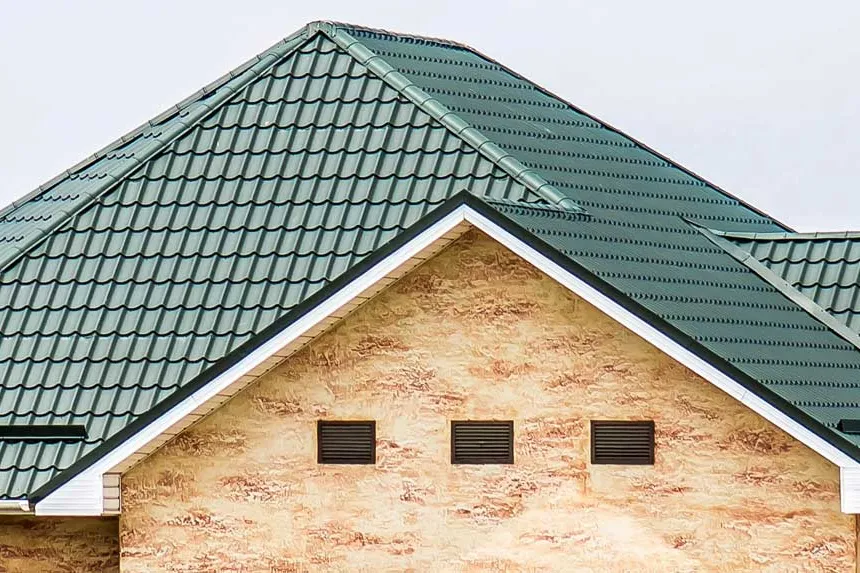
It is a metal roof formed to look like rows of tile. Each panel covers several tile shapes at once, and panels overlap or interlock in courses up the roof, so you see the rounded rhythm of tile without setting each piece by hand.
There are two finish routes. Painted steel or aluminum usually carries PVDF or SMP paint. Stone-coated steel has stone granules bonded to its face for a matte, terracotta-like surface. Profiles range from the deep S-curve of Spanish or barrel tile to flatter tile shapes.
Prefer the look of shake or slate? See metal shingles and shakes. Want clean vertical lines? See standing seam.
Metal vs real tile
Metal tile, clay or concrete: what really differs?
The big difference is weight. Clay and concrete tile are heavy, and before they go on a house built for shingles the framing usually needs an engineer’s check. Metal tile weighs about what other metal roofs do, so that question usually does not come up.
| Feature | Tile-look metal | Real clay | Real concrete |
|---|---|---|---|
| Weight | Light, like other metal roofs | Heavy; framing check usually needed | Heavy; framing check usually needed |
| Foot traffic | Walkable with care, per the maker’s instructions | Tiles can crack underfoot | Tiles can crack underfoot |
| Freeze and thaw | Metal does not absorb water | Needs tile rated for freezing climates | Absorbs some water; durability varies by product |
| Snow | Guards recommended above entries | Guards often used | Guards often used |
| Who installs it | Metal roofing crews, including ours | Tile specialists | Tile specialists |
Real tile has its place, and a historic commission may expect it on a house that already has it. Where weight or New Jersey freeze-thaw cycles make real tile a hard sell, metal tile is the practical way to keep the look.
Where it fits
Where does metal tile fit on New Jersey homes?
On houses whose style calls for tile. Metal tile roofing in NJ is most at home on these:
- Stucco Mediterranean and Spanish revival homes
- Shore houses with a coastal style, in aluminum or a coastal-rated finish
- Porch and entry roofs that should match a tile-style main roof
- Houses where the owner wants tile but the framing was built for shingles
Slope comes first. The model code text puts the floor for metal roof shingles at 3:12 (2024 IRC text, R905.4), and tile-profile products print their own minimums in their instructions. Low porch roofs often need standing seam instead.
Near the water, read the warranty. Metal Sales leaves Galvalume roofs closer than 1,500 feet to salt water out of its coverage, and MBCI says it sells a finish formulated for salt spray and sea air. Our guide to metal roofs at the Jersey Shore explains the options.
In a historic district, ask before you plan. Local commissions formed through the Municipal Land Use Law can review big exterior changes, and skipping a roof permit does not skip that review, as a New Jersey Historic Trust guide explains.
Winter
Do metal tile roofs need snow guards in New Jersey?
Yes, over doors, decks, paths, lower roofs and the driveway. Tile profiles hold snow better than smooth panels, but a warm afternoon can still release it as a slab.
Snow loads climb as you go north. State guidance calls for site-specific values, with fallback ground snow loads of 50 psf for Sussex, 40 for Passaic, 35 for Hunterdon and Morris, and 30 for Somerset (DCA Bulletin 19-1). Guards for tile-profile metal are made to fit the profile and installed as the panel maker directs.
Ice dams are a separate problem that starts with attic heat, per University of Minnesota Extension. Every metal roof we install gets a self-adhered eave membrane, though the state makes an ice barrier mandatory in Sussex County alone (DCA Bulletin 07-3). Read more in our ice-dam guide.
Installation
How is a metal tile roof installed?
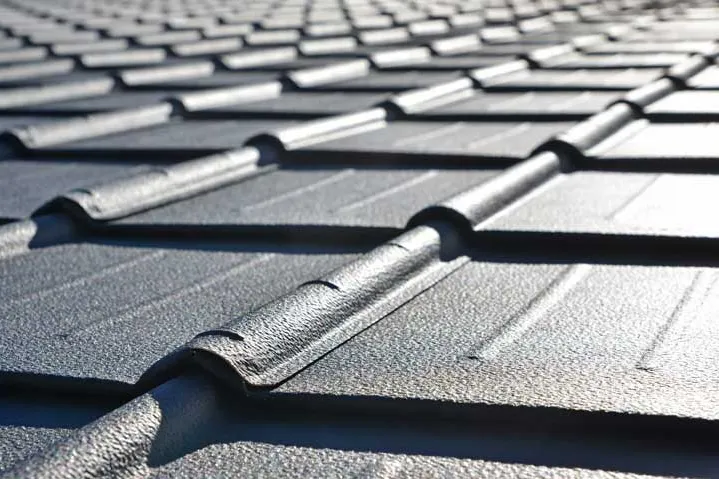
Like other metal systems, it starts at the deck and works up in courses.
- Strip the old roof to bare deck and inspect it; repairs outside the contract need a signed change order
- Self-adhered eave membrane at the edges and underlayment across the deck
- Eave trim and starter, then tile panels course by course up the roof
- Flashing at walls, chimneys, skylights and valleys
- Hip and ridge caps shaped to the tile profile, with ridge ventilation
- Snow guards, clean-up and a walk-around with you
Putting a new covering on the roof of a freestanding one- or two-family house needs no construction permit; the state code calls it ordinary maintenance (the ordinary-maintenance rule). Attached homes generally need a permit. Our process page covers the contract, schedule and walk-through.
Cost and warranty
What does metal tile roofing cost?
We price metal tile from a measurement at the house. National cost guides do not break out tile profiles; the closest published figures cover metal shingles, at $6 to $14 a square foot installed (HomeGuide) and $7 to $22 (HomeAdvisor).
Treat those as a rough countrywide reference, not a local quote; a free measurement sets your real number. A full new roof is exempt from New Jersey sales tax after the homeowner completes Form ST-8 for the contractor (bulletin S&U-3). Our metal roof cost guide has more.
Warranty
Our written workmanship warranty covers the installation; the maker’s warranties cover the metal and finish. Check the chalk and fade terms for the exact color you pick.
Our workmanship warranty is a lifetime warranty: it covers our installation work for as long as you, the homeowner who signs the contract, own the home. It does not transfer to a later owner. Materials and paint finishes carry their manufacturers' own warranties, and the full written warranty comes with every estimate so you can read it before you sign.
Our warranty page explains how the two fit together.
Get a free estimate
Tell us about the house and the work. We visit, measure and give you a written price before any work starts.
Prefer to talk now? Call (732) 231-5327.
Metal tile questions from New Jersey homeowners
How much lighter is metal tile than real tile?
Much lighter. Clay and concrete tile usually need a framing check before they go on a house built for shingles; metal tile weighs about what other metal roofs do, so that question usually does not come up.
Does metal tile look like real tile from the street?
From the curb, a good tile profile in a terracotta or stone-coated finish reads as tile. Up close, the panel joints and metal edges show, so look at a sample first.
Can metal tile handle New Jersey snow?
Yes, with snow guards over doors and paths and an eave membrane along the edges. In the northern counties the state’s fallback ground snow loads reach 50 psf in Sussex, so ask about guard layout at the estimate.
How steep does a roof need to be for metal tile?
The model code text sets 3:12 for metal roof shingles, and tile-profile products carry their own minimums. Flatter roofs are usually better in standing seam.
Does a metal tile roof need a permit?
Not on a freestanding one- or two-family house, where the state code files a roof covering swap under ordinary maintenance. Attached homes generally need one, and a historic district may add its own review.
Is metal tile a good choice near the ocean?
It can be, in aluminum or with a paint formulated for salt air. Metal Sales does not warrant Galvalume roofs closer than 1,500 feet to salt water, so we read the warranty terms against your address first.
Free estimate
Get a written metal tile price
Our visit covers every roof plane and its slope, and you receive a written price listing the profile, finish and warranty.
Call (732) 231-5327 or send the form. We serve ten counties in central and northern New Jersey; see our service areas.