Are triple-pane windows really worth it? In the northern counties we serve, a third pane is the most common way to reach ENERGY STAR’s lowest U-factor, so it often earns its place. In the central and shore counties, a well-built double-pane window can meet the standard, and the third pane becomes a comfort upgrade to weigh against its price.
Here is what a third pane changes, what national price data says, how it affects condensation and noise, and where it pays off. You will not find an energy-savings percentage here, because no source we trust supports one for your house.
What does a third pane actually change?
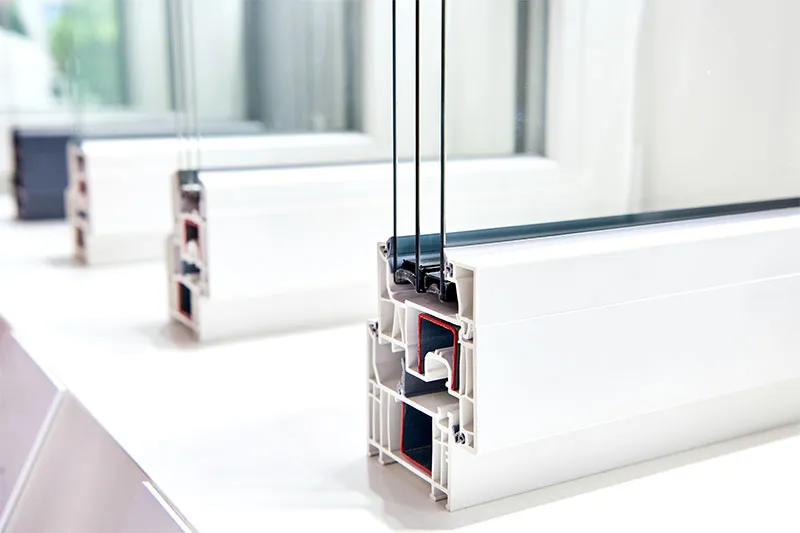
It lowers the U-factor, the rate at which heat flows through the window; a lower number means less heat loss. The Department of Energy describes high-performance windows as two or three panes with insulating spacers, low-E coatings and argon or krypton gas between the panes. Each of those features lowers the U-factor.
| Glass package (vinyl window) | Typical U-factor in EPA’s analysis |
|---|---|
| Two panes, one low-E coating, argon fill | 0.28 to 0.31 |
| Three panes, two low-E coatings, argon fill | 0.22 to 0.23 |
| Two panes with argon, room-side low-E, foamed frame and non-metal spacers | As low as 0.21 in some product lines |
EPA found that adding a third pane, with the related frame, low-E and spacer upgrades, can cut the U-factor by 0.06 or more. These numbers come from a 2021 draft analysis for ENERGY STAR Version 7, so treat them as typical ranges, not a rating for any one window.
Does the gas or the frame matter?
Both do. EPA notes that argon is the most common gas fill and that krypton costs more. The Department of Energy lists wood, vinyl and fiberglass as nonconductive frame materials, so the frame is part of the rating, not just the glass. Compare whole-window numbers, never glass-only figures.
Do you need triple-pane glass to meet ENERGY STAR in New Jersey?
No, but your county decides how close you come. ENERGY STAR puts Somerset, Morris, Hunterdon, Passaic and Sussex counties in its Northern zone, where the main target is a U-factor of 0.22 or lower. Middlesex, Monmouth, Mercer, Essex and Ocean counties are North-Central, where 0.25 or lower qualifies.
The Northern zone also has equivalent paths: a U-factor of 0.23 to 0.24 with SHGC (solar heat gain coefficient) at 0.35 or higher, or 0.25 to 0.26 with SHGC at 0.40 or higher. Those paths reward glass that lets in more winter sun. Since EPA found most product lines below 0.24 use three panes, the 0.22 path usually means triple-pane. A strong double-pane unit can meet the North-Central 0.25. The zone numbers get more detail on our energy-efficient windows page.
What does the third pane add to the price?
More, but the ranges overlap. HomeGuide’s national cost figures for 2026 put triple-pane windows at $450 to $3,000 each installed, against $400 to $2,000 for double-pane. The window unit is 65 to 75 percent of the total, so the glass package moves the price more than the labor does.
EPA’s own analysis assumed a much smaller premium: about $54 per window over its baseline to reach a U-factor of 0.22 to 0.23. That was a modeling assumption for one standard vinyl window type, not a retail price. Real quotes depend on size, style and frame, and your exact price comes from a free measurement.
No federal credit offsets the premium: IRS guidance ends the 25C credit for windows installed in 2026 or later. New Jersey’s utility programs focus on insulation and air sealing, and its federal home energy rebates did not list windows and were not open as of October 2026.
Will a third pane end window condensation?
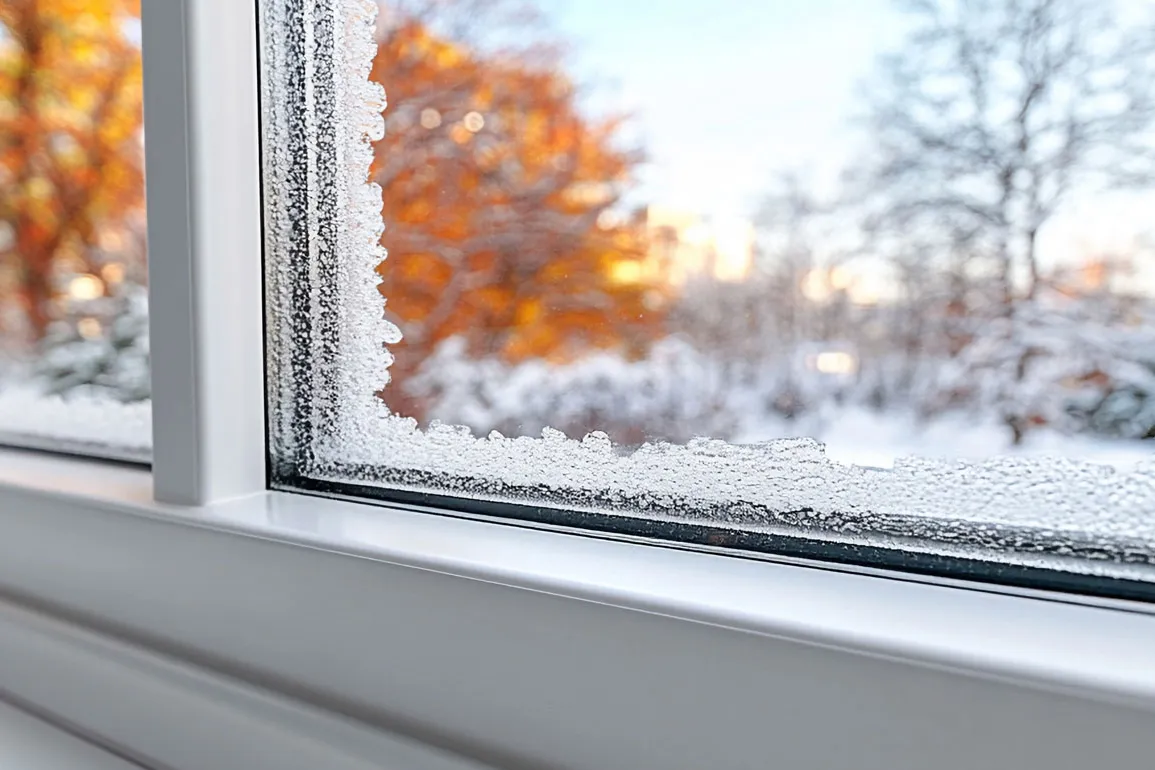
It can cut room-side condensation, but indoor humidity still decides most of it. Moisture forms when humid indoor air reaches the glass, typically the coldest surface on an outside wall, so Andersen suggests keeping winter humidity at or below 30 to 35 percent. Natural Resources Canada adds that tighter, high-performance windows tend to show less of it than ordinary ones.
Two other cases are worth knowing. Fog between the panes means the seal has failed and the sealed unit should be replaced, whatever the pane count. And windows with low-E coatings, especially room-side coatings, can show brief condensation on the outside around sunrise on cool, calm, humid nights. That moisture sits on the outside of the glass and does not mean the window failed.
Are triple-pane windows quieter?
Sometimes, but a third pane is not soundproofing. How much noise a window blocks depends on glass thickness, the space between panes and how tightly the sash seals. Two windows with the same pane count can sound quite different.
If road, rail or aircraft noise is the main reason you are shopping, ask for the tested sound rating of the exact unit, such as its Sound Transmission Class (STC). Compare that number across glass packages, including double-pane options. We will not promise a quieter house from pane count alone.
When is a triple-pane window worth it, and when is it not?
It tends to pay off where winters are colder, rooms run cold or damp and you plan to stay. It is harder to justify where a good double-pane window already meets the standard.
Worth a close look when
- The house is in Somerset, Morris, Hunterdon, Passaic or Sussex County and you want the 0.22 Northern-zone target.
- A room feels cold next to the glass all winter.
- Room-side condensation keeps forming even with indoor humidity at 30 to 35 percent.
- You expect to live there for many years, so comfort outweighs the upfront premium.
Probably not worth it when
- The house is in Middlesex, Monmouth, Mercer, Essex or Ocean County and a double-pane unit already meets the 0.25 limit.
- The house leaks air elsewhere. New Jersey’s own utility programs start with insulation and air sealing, and a third pane will not stop air moving through the attic or walls.
- The premium is large and the only argument for it is a savings percentage with no source behind it.
An older house adds one fixed step either way. In a pre-1978 home, EPA treats every window replacement as covered work under its lead rule, however small the job, so it calls for a certified firm and lead-safe practices whether the new unit has two panes or three.
What should a triple-pane quote include?
The whole-window numbers, in writing. Ask for each unit’s U-factor, SHGC and air leakage rating, its frame material and gas fill, and the same figures for the double-pane option in that opening. ENERGY STAR caps air leakage at 0.3 cubic feet per minute per square foot in every zone. State home improvement rules already require any contract above $500 to list the main products, including make, model, size and grade where applicable.
Then weigh the premium on each window against what you want from it: a lower U-factor, a warmer room or a drier sill. So, are triple-pane windows worth the money for your house? Our triple-pane windows page shows the options, our guide to the seven signs it is time for new windows helps you decide which openings come first, and the windows overview covers the rest.
Get a free estimate
Or call (732) 231-5327.
Triple-pane window questions
Do triple-pane windows pay for themselves?
No source we rely on gives a payback period or percent savings for a typical home. What can be measured is the U-factor: EPA found a third pane, with related upgrades, can lower it by 0.06 or more. Whether that pays depends on your house, your county and the price gap on your quote.
Are triple-pane windows required for ENERGY STAR in New Jersey?
No. The Northern zone asks for U-factor 0.22 or lower, or an equivalent option, and the North-Central zone allows 0.25 or lower. EPA notes some double-pane designs reach 0.21.
How big is the price gap between triple-pane and double-pane glass?
In HomeGuide’s national 2026 ranges, triple-pane windows run $450 to $3,000 each installed, versus $400 to $2,000 for double-pane. Your exact price comes from a free measurement.
Will a third pane keep my windows from sweating inside?
They can reduce it: Natural Resources Canada says tighter, high-performance windows tend to show less condensation. Indoor humidity still matters most, and Andersen suggests 30 to 35 percent or lower in winter.
Can triple-pane windows earn a tax credit in 2026?
No. Under IRS guidance, the federal 25C credit does not cover windows placed in service after 2025, and New Jersey’s utility programs focus on insulation and air sealing rather than windows.
Are triple-pane windows quieter than double-pane windows?
Not automatically. Sound depends on glass thickness, the space between panes and how tightly the sash seals. If noise matters most, ask for the tested sound rating of the exact unit.
Sources
- U.S. EPA, ENERGY STAR Version 7.0 criteria analysis report
- ENERGY STAR, certification criteria for residential windows and climate zone finder
- U.S. Department of Energy, High-Performance Window Systems: Glass and Purchasing Energy-Efficient Residential Windows
- HomeGuide, window replacement cost (2026)
- Andersen Windows, condensation on the interior of window glass; Natural Resources Canada, Condensation
- IRS, FAQs on section 25C under Public Law 119-21
- NJ Clean Energy Program, utility-run programs for homeowners and home energy rebates
- U.S. EPA, RRP program for contractors
- Cornell LII, New Jersey home improvement practices rules
Two panes or three
Price both glass options for your windows
Tell us which rooms bother you. We measure every window opening and write up the price. Ask for double-pane and triple-pane glass on the same estimate.